
Ras Al Khaimah Area 4 & 5
Exploring natural hydrogen
at the heart of the Semail ophiolites
45-8 ENERGY signs an MoU with the Ras Al Khaimah Department of Energy
In November 2026, 45-8 ENERGY signed a Memorandum of Understanding with the Ras Al Khaimah Department of Energy to explore natural hydrogen in the RAK South area of the United Arab Emirates.
📍 Two areas, 441 km², 24 months
Over the next 24 months, 45-8 ENERGY will study two areas covering a combined 441 km². Geological studies, fieldwork and new geophysical surveys will help identify and rank the most promising drilling targets.
👉 Exceptional geology
RAK South sits on the Semail Ophiolite, one of the few places in the world where rocks from the Earth's mantle have been pushed up to the surface. These rocks naturally generate hydrogen, and several natural hydrogen seeps have already been reported in the area. Having the source rocks right at the surface makes them much easier to study.
The Ras Al Khaimah natural hydrogen project
The region comprising the United Arab Emirates and the Sultanate of Oman is known to geologists for harbouring natural sources of hydrogen. It is against this favourable geological backdrop that, in November 2026, 45-8 ENERGY has signed a Memorandum of Understanding (MoU) with the Ras Al Khaimah Department of Energy (DoE) to advance the exploration of natural hydrogen in the RAK South area of the UAE.
The agreement covers Areas 4 and 5 of RAK South and launches a 24-month programme of geological studies and fieldwork aimed at evaluating the area’s natural hydrogen potential and identifying priority targets for future exploration drilling. The programme represents an important step towards assessing the resource potential of one of the world’s most promising natural hydrogen settings and establishing the technical and economic foundations for 45-8 ENERGY and the DoE to negotiate a future exploration and production agreement for either Area 4 or Area 5 of RAK South.
The study area
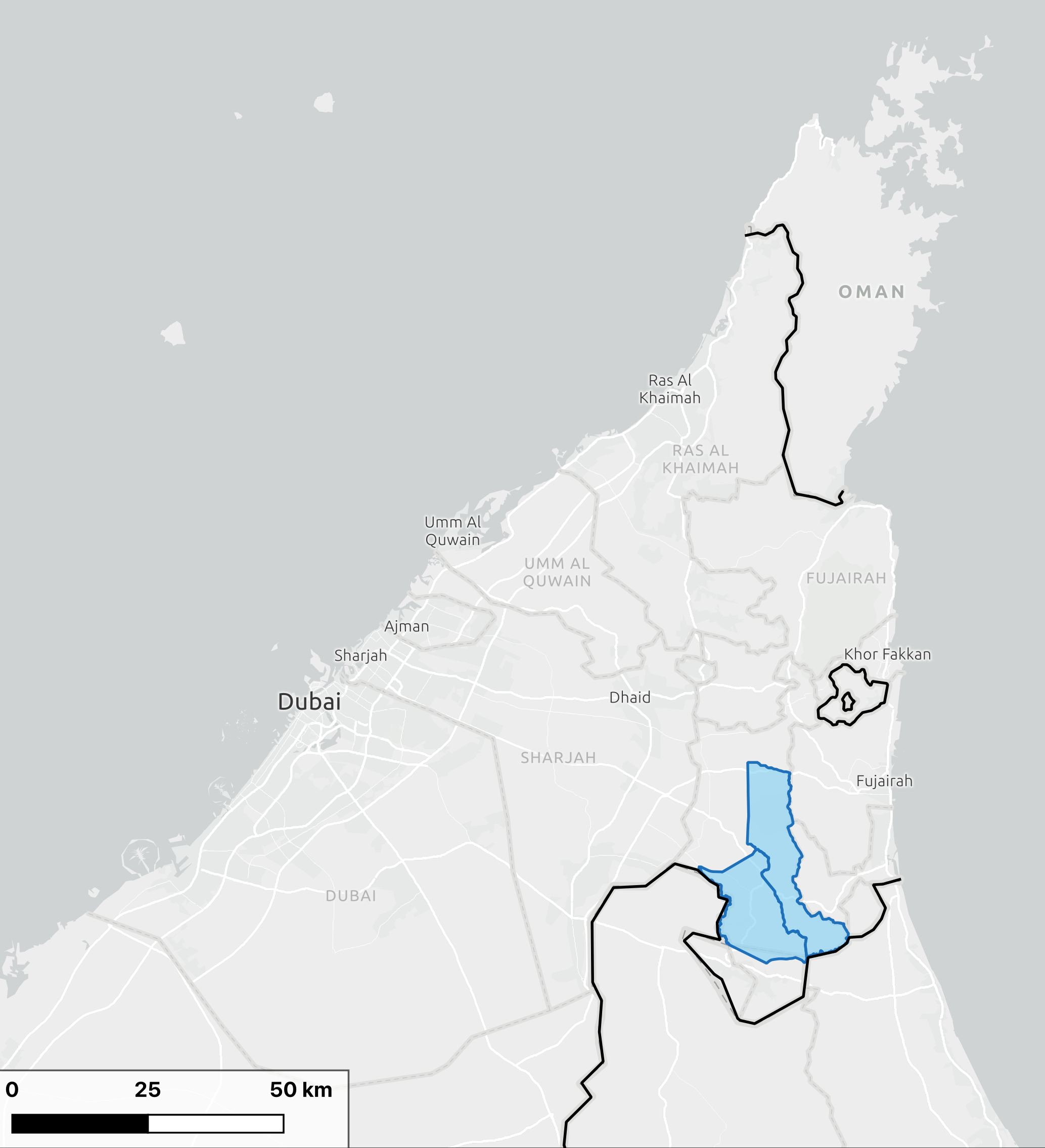
The two areas being explored by 45-8 ENERGY are situated to the south of the emirate of Ras Al Khaimah, to the East of Dubai.
They cover a total area of 441 km².
A closer look at geology
The Semail ophiolite, an open-pit source of natural hydrogen
The southern part of Ras Al Khaimah lies at the northern end of the Semail Ophiolite, one of the largest outcrops of oceanic crust and Earth’s mantle visible on the Earth’s surface. This formation stretches along the Hajar Mountains, between the Sultanate of Oman and the United Arab Emirates.
These rocks are normally found beneath the ocean floor. They were uplifted to the surface tens of millions of years ago during the collision of tectonic plates. Their accessibility makes them an ideal subject for study.
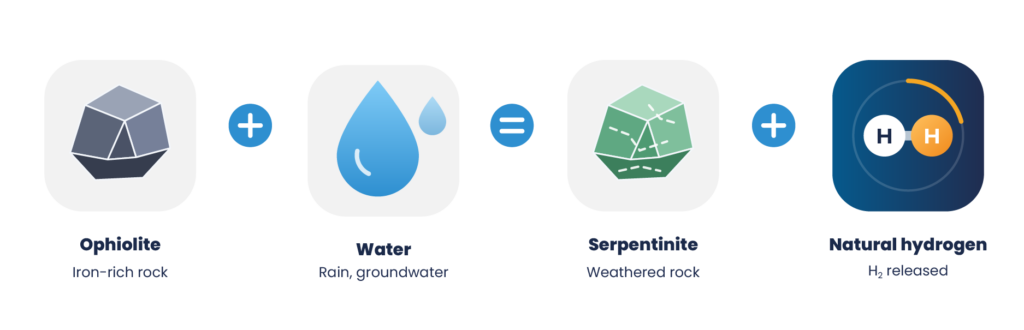
The ultrabasic rocks of the ophiolite are rich in iron-bearing minerals. On contact with water, they weather and release natural hydrogen: this is the process known as serpentinisation. The faults running through the region can then channel this gas towards the surface or trap it beneath impermeable rocks.
Frequently Asked Questions
What is natural hydrogen?
Natural hydrogen is a gas produced naturally in the subsurface, in particular through the reaction between water and iron-rich rocks. It is a low-carbon energy source that would complement the low-carbon hydrogen mix.
Why explore natural hydrogen in Ras Al Khaimah?
The southern part of the emirate contains ophiolites, deep-seated rocks that have risen to the surface, which are known to produce natural hydrogen. Sources containing hydrogen have already been identified there.
Is natural hydrogen a decarbonised resource?
Yes! Natural hydrogen, produced naturally underground, is a totally carbon-free resource. Its production requires no critical materials, anthropogenic energy or water, and enables the resource to be valorized at extremely competitive costs, making it a direct contribution to the energy and ecological transition.
Why produce natural hydrogen?
Native hydrogen has a role to play in the decarbonization of industry and mobility. This type of hydrogen could easily be integrated into the existing low-carbon hydrogen mix as a natural, decarbonized and competitive resource.

